Da Nang is quietly becoming an indie hacker hub
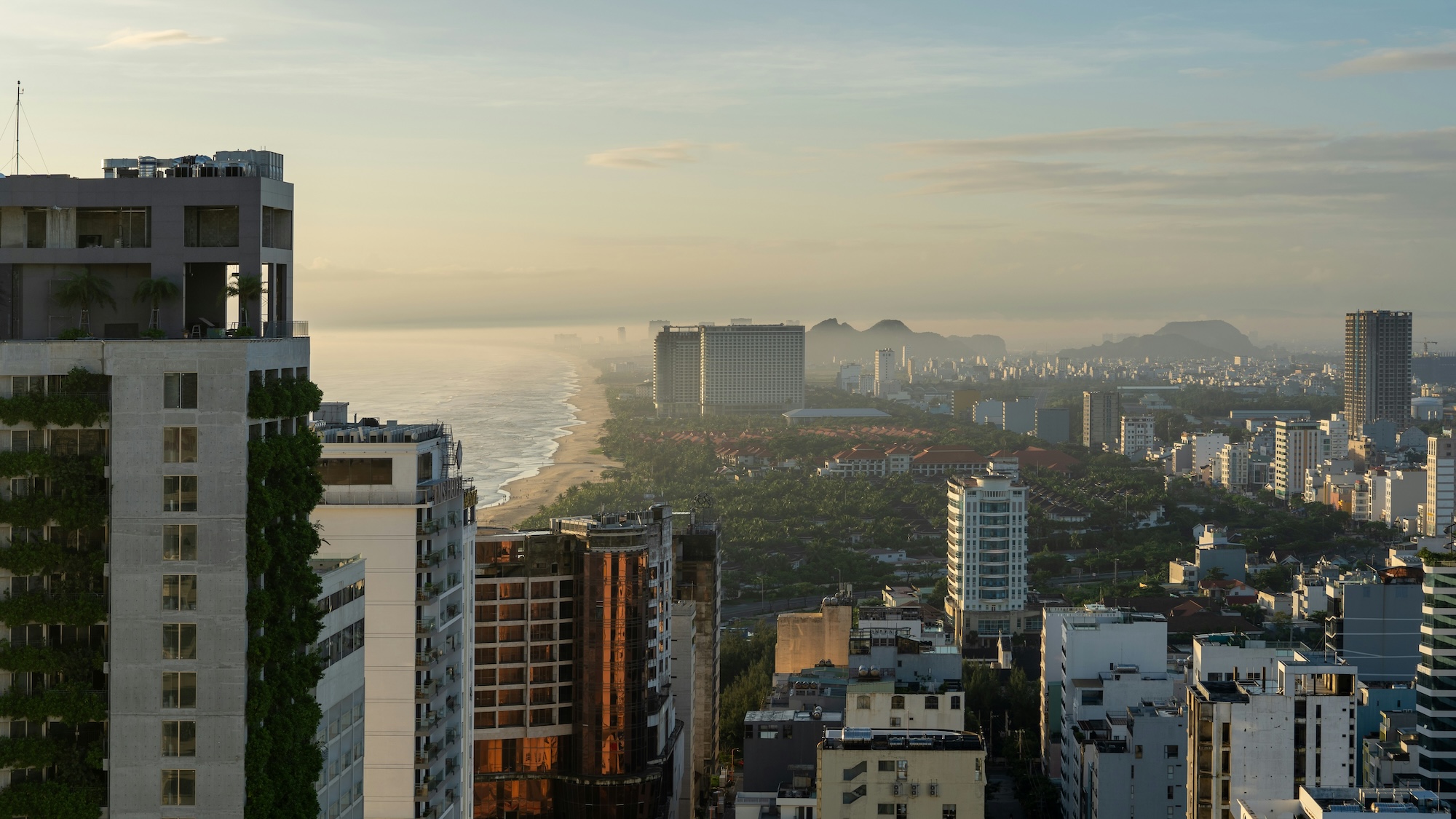
I live in Ho Chi Minh City, 600km south of Da Nang. I’ve watched this thing happen the way you watch a wave roll in from a balcony: slowly, then all at once.
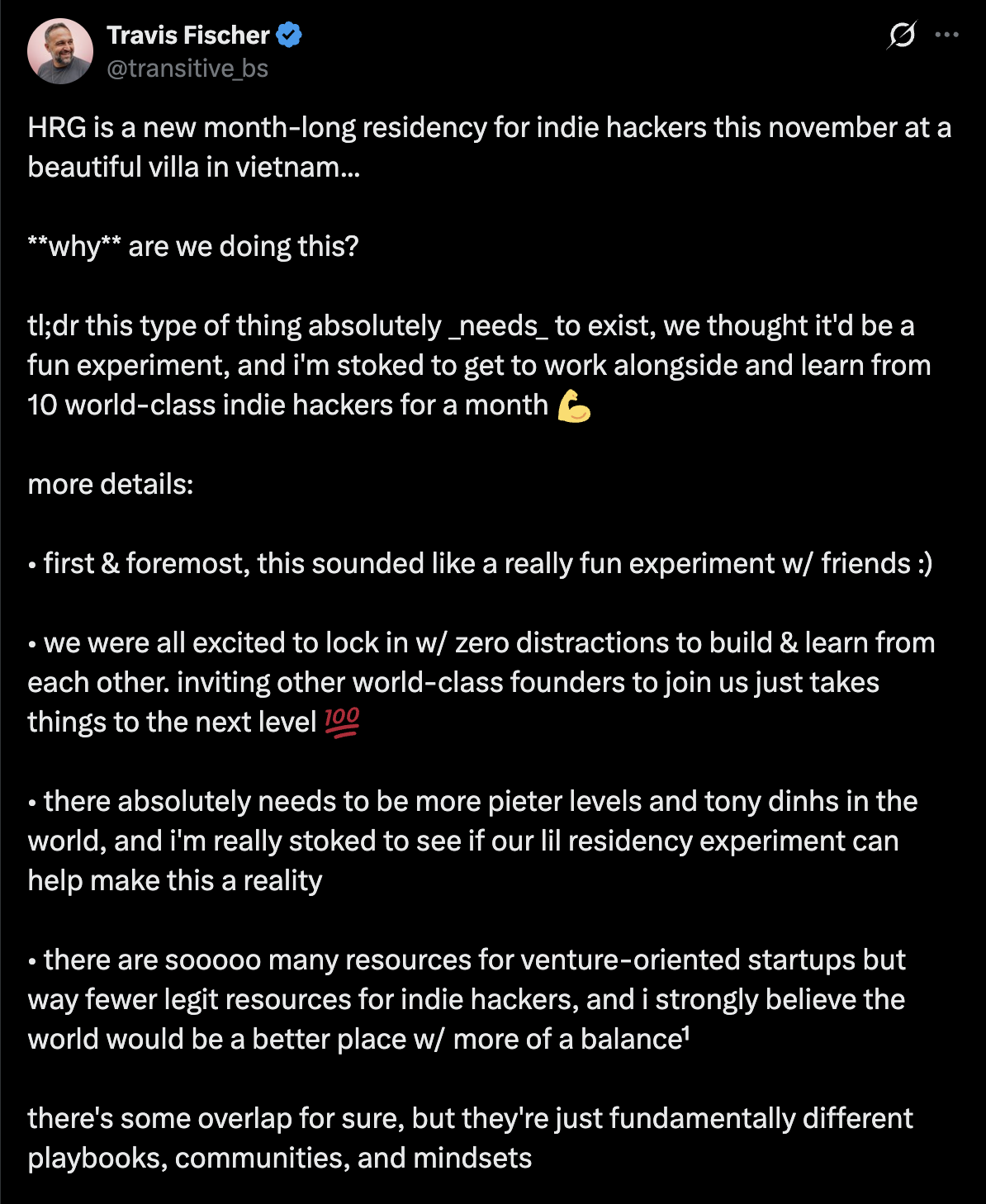
Last November, 13 international teams from the US, Singapore, Korea, India, Canada and a few other timezones locked themselves in Marisol Villa on the Son Tra Peninsula for 30 days to build software. No equity taken, no fees charged, no demo-day pitch theater (well — one at the end). Just a 14-bedroom villa, catered meals, a videographer on staff, and 400 applications from 25 countries whittled down to ten-ish builders. Demo Day pulled in Antler, Golden Gate Ventures, and Zinance.
It’s called the Hacker Residency Group. Travis Fischer (Agentic, ex-HF0) runs it with Tony Dinh (TypingMind, $2M+ ARR solo), Minh-Phuc Tran (built 8 startups in 12 months, sold 3), and David Park (Raya, Kippo). The next batch kicks off April 21st and runs through June 1st. There’s another one stacked behind it in May.
That cluster of names is the entire point of this post.
The unsexy version of why Da Nang works
You can list the surface stuff in one breath. Forbes named it one of the world’s top nomad cities for 2026. Nomads.com ranks it #2 globally. Cost of living lands at $1,000–$1,500/month for a comfortable single. ACE Coworking is $137/month. Internet is genuinely fast — the kind where you stop noticing it, which is the only real test. The beach is a five-minute walk from the An Thuong / My An nomad neighborhood. The 90-day multi-entry e-visa is $50, and you can do a visa run to Bangkok for the cost of a flight.
None of that is unique to Da Nang. Chiang Mai has had this for a decade. Bali had it before that. Lisbon, Medellín, Tbilisi — same checkboxes, often better weather.
What’s different is who’s there.
The gravity well
Tony Dinh has been in Vietnam for years building a 7-figure-ARR business solo. Minh-Phuc Tran is shipping startups at a clip that would be unbelievable if he weren’t doing it in public. Both are Vietnamese, both have outsized audiences on X, and both have spent the last few years quietly demonstrating that you can build a real software business from a café in central Vietnam without needing San Francisco to validate it.

That’s the seed. HRG is what happens when other builders see the seed and want to plant nearby.
If you’ve been on indie hacker X at all this year, you’ve felt the shift. The default aspiration used to be “move to SF, get into YC.” For a non-trivial slice of devs in 2026, it’s “fly to Da Nang for a month, build with Tony, ship something, fly home.” Different playbook. Different incentives. Different exit math.
The tension nobody puts in the highlight reel
Here’s the part the digital nomad blogs gloss over: Nomads.com rates Da Nang’s happiness score as Bad, even while ranking its infrastructure #2. The gap between “great place to work from” and “great place to live” is real and underdiscussed. The An Thuong scene is touristy. Karaoke noise. Construction. Rents have been climbing since 2025. Stay 183+ days in any 12-month window and you trip Vietnamese tax residency on worldwide income at 5–35% progressive rates, which most guides handwave or skip entirely.
People aren’t moving to Da Nang because Da Nang is paradise. They’re moving because they want to be in a room with other people who are shipping, and that room is currently in Da Nang.
This is also why I don’t think Chiang Mai or Bali eats this niche back. Those cities optimized for nomads at population scale — yoga, smoothies, infinity pools, a coworking on every corner. Da Nang is optimizing (accidentally, mostly) for a thinner slice: experienced founders who’ve already shipped things, want zero distractions, and want to be near a few specific other humans for a few specific weeks. That’s a much smaller and much stickier audience.
Why now
The real catalyst isn’t Da Nang. It’s AI.
A solo dev with Claude Code and a reasonable stack can ship things in 2026 that needed a small team in 2022. The bottleneck moved off engineering hours and onto taste, distribution, and not-going-insane-alone. The first two scale fine from anywhere with wifi. The third is where physical co-location still earns its rent.
That’s what HRG is selling and what the city is becoming an unintentional venue for: a place where the loneliness tax of indie hacking gets paid down by being around ten other people running the same playbook. Demo Day at the last residency reportedly featured cinematic AI video tools, multi-agent systems, productivity platforms, health-tech — the full surface area of what AI-native solo founders are now able to attempt.
Where this goes
Da Nang isn’t going to be Silicon Valley 2.0, and the people moving there aren’t pretending otherwise. The Da Nang Innovation Startup Support Center has a 2030 plan with 600 innovation projects and at least one unicorn target — fine, every city’s economic dev office writes documents like that. The real metric is simpler: how many $1M-ARR-solo stories come out of villas on Son Tra over the next 24 months, and how many of those founders stay long enough to mentor the next batch.
I’m watching from HCMC for now. Different city, different vibe, but same country, same time zone, same five-hour drive if I decide to drop in. The interesting thing about a hub forming is that you don’t have to be inside it to feel its pull.
If you’re an indie hacker reading this in some other timezone, weighing whether to apply to HRG or just book a month in An Thuong on your own — the answer is probably yes, and if you wait until Forbes runs the next ranking, the rents will already be up another 30%.